
Calculation Part (Astrology) / Ganit Jyotish
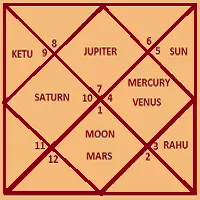
Calculation Part of Indian Vedic Astrology (Ganit Jyotish)
Ganit Jyotish refers to the mathematical and astronomical foundation of Indian Vedic Astrology or Jyotish . It deals with precise calculations required to construct a horoscope or Janma Patrika (Janma Kundali) based on the position of planets or grahas , stars, and other celestial bodies at the time of birth. Without accurate calculations, predictive astrology (Phalit Jyotish) would be baseless.
1. Birth Time and Coordinates
The very first step in Ganit Jyotish is to record the exact date, time, and place of birth. Latitude and longitude of the birth location are used to determine the local sidereal time, which helps calculate the rising sign (Lagna) and planetary positions accurately.
2. Ayanamsa
Ayanamsa is the difference between the tropical (Western) and sidereal (Vedic) zodiacs . It is essential for converting planetary positions from the tropical system to the Vedic system. The most commonly used ayanamsa is Lahiri Ayanamsa in India.

3. Calculation of Lagna (Ascendant)
The Lagna or Ascendant is the zodiac sign rising on the eastern horizon at the time of birth. It is calculated using local sidereal time, which is determined based on the birth time and place. The Lagna forms the starting point of the twelve houses in the horoscope.
4. Planetary Positions (Graha Sthiti)
The exact positions of the nine planets ( Sun or Surya , Moon or Chandra, Mars or Mangal, Mercury or Budh, Jupiter or Guru, Venus or Shukra, Saturn or Shani, Rahu, and Ketu ) are calculated using astronomical ephemeris. Their placement in various Rashis (zodiac signs) and Bhavas (houses) is noted in degrees and minutes.
5. Rashi and Nakshatra Calculation
Each planet’s placement in a particular Rashi (zodiac sign) and Nakshatra (lunar mansion) is determined based on their longitude. There are 12 Rashis and 27 Nakshatras , each having profound significance in interpretation.
6. Bhava (House) Calculations
The twelve Bhavas or houses are calculated based on the Lagna degree. Various house division systems like Equal House, Placidus, or the most widely used in India—Sripati or Porphyry system—are used for accurate house divisions.
7. Dasha and Antardasha Calculations
Planetary periods dashas are calculated mainly using the Vimshottari Mahadasha-Antardasha system, which is based on the Moon’s Nakshatra at birth. This helps determine the sequence and duration of planetary influences in a person’s life.
8. Panchang Elements
Ganit Jyotish also involves Panchang (Hindu calendar) calculations such as Tithi (lunar day) , Vara (weekday), Nakshatra, Yog , and Karan —used for both Muhurat determination and birth chart analysis .
9. Shadbala and Ashtakavarga
Shadbala is a system to calculate the strength of planets, while Ashtakavarga is a numerical technique that assigns values to planets and houses to assess their relative strengths and influences.
10. Transit (Gochar) Calculations
Ganit Jyotish is also applied to compute planetary transits across different Rashis and houses, which play a vital role in timing of events in a native’s life.
In conclusion, the calculation aspect of Vedic Astrology - Ganit Jyotish - forms the bedrock upon which predictive interpretations are built. It is a highly precise, astronomy-based discipline that requires deep knowledge of mathematics and planetary motion.
By: -

|

Address: -
|
Mobile/WhatsApp: -+91-8006959091 |
Email ID: -astro.kalra@gmail.com |
Web: -https://astrologer-astrology.com |